How to send money from Kenya to China
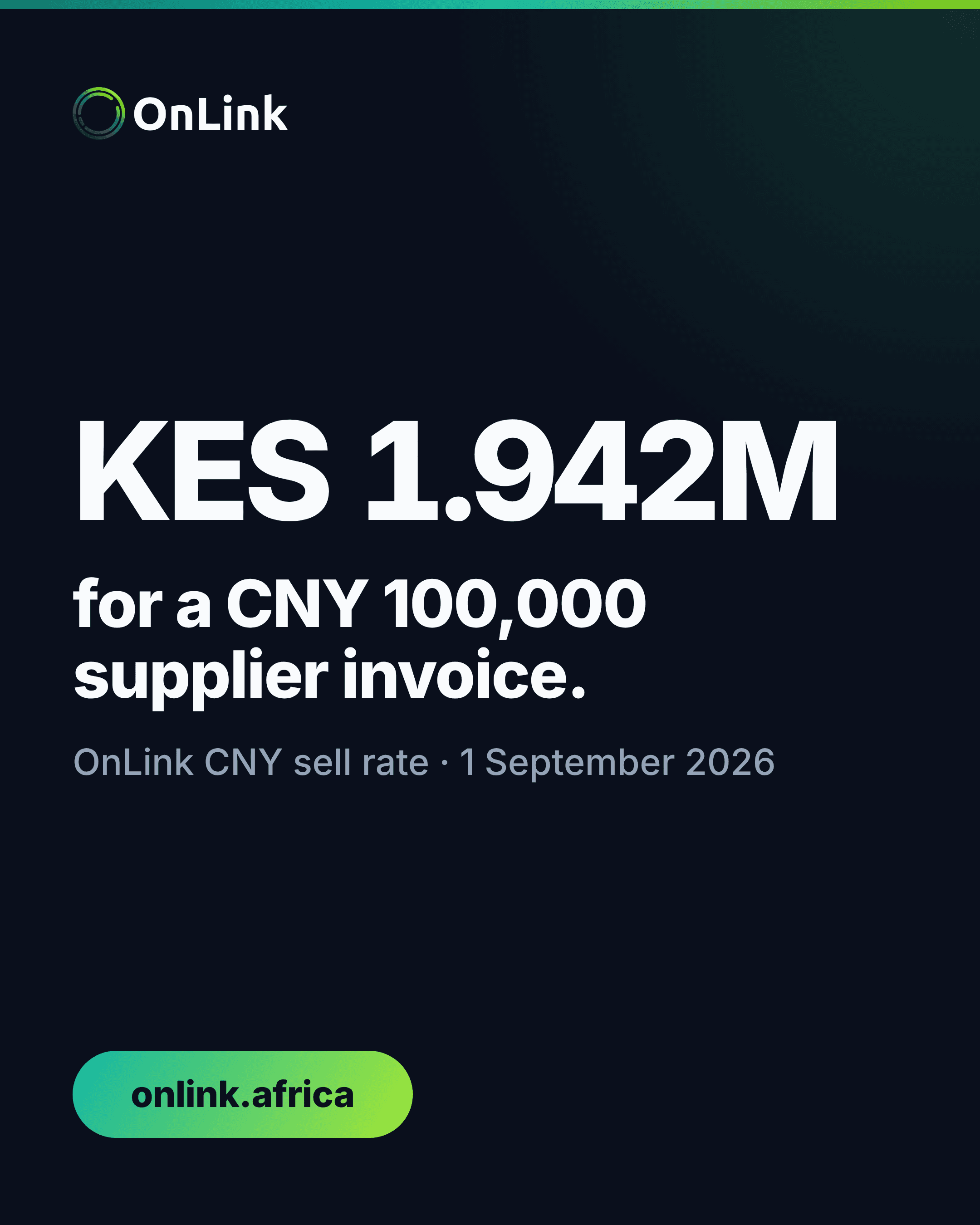
At a CNY sell rate of KES 19.42, a CNY 100,000 supplier invoice costs KES 1,942,000; each KES 0.10 rate difference changes the bill by KES 10,000.
4 min read
A 25bp rate move equals KES 2,500 a year on KES 1M if fully passed through; a KES 1 USD/KES move changes a USD 10,000 supplier bill by KES 10,000.
A CBK rate decision changes the price of money, not the number of shillings in a dollar.
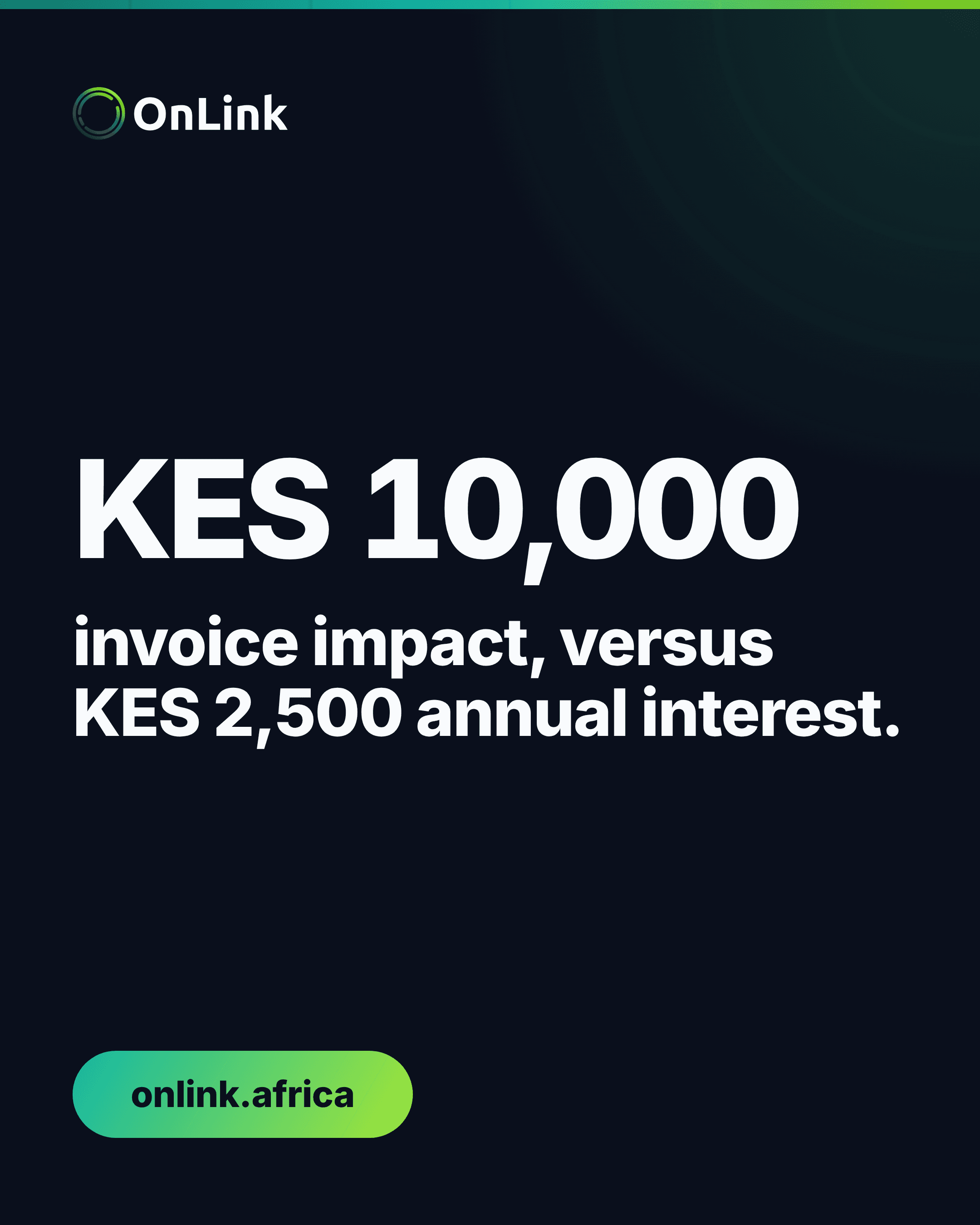
A 0.25 percentage-point move equals KES 2,500 a year on KES 1 million if a lender passes it through in full. A KES 1 move in USD/KES changes the mid-market value of a USD 10,000 supplier bill by KES 10,000—four times as much.
For a Kenyan importer, the policy announcement and the currency quote therefore belong on separate lines. The Central Bank Rate describes monetary policy; the USD/KES rate determines the shilling value of the dollar invoice.
| Same importer, two different calculations | Amount |
|---|---|
| 0.25 percentage points × KES 1,000,000 | KES 2,500 a year |
| KES 1 per USD × USD 10,000 | KES 10,000 per invoice |
The Central Bank of Kenya's CBR definition starts with Section 36(4) of the Central Bank of Kenya Act: the CBR is the lowest interest rate CBK charges on loans to banks. The Monetary Policy Committee reviews and announces it at least every two months.
CBK says the direction and size of a CBR move signal its monetary-policy stance. The rate is also the base for CBK's monetary-policy operations. Neither statement turns the CBR into a retail lending rate or a foreign-exchange rate.
The distinction is visible in the units. A cut from 9.00% to 8.75% is a change of 0.25 percentage points, also called 25 basis points. USD/KES at 129.00 means one dollar has a mid-market value of KES 129.00. Subtracting 0.25 from 129.00 mixes a percentage with a currency amount.
At its 11 August 2026 meeting, the MPC held the CBR at 8.75%. OnLink's report on the USD/KES move after that decision records what happened to the currency as a separate observation. The timing alone does not prove that the decision caused the exchange-rate move.
CBK's monetary-policy explainer says CBR movements transmit into short-term interest rates. A reduction signals easier monetary policy and a desire for market interest rates to move down.
That wording matters. CBK describes a transmission process, not a promise that every lender will change every customer rate by the same number on the same day. The KES 2,500 figure is therefore a full-pass-through illustration:
KES 1,000,000 × 0.25% = KES 2,500 a year
If only half of the policy move reached that borrowing rate, the annual change would be KES 1,250. If the loan rate did not change, the direct interest calculation would remain unchanged. The loan agreement and the lender's new rate notice establish the actual amount.
This calculation is useful for working-capital debt, but it still says nothing about the shilling cost of a dollar invoice. That cost needs an observed USD/KES quote.
CBK's foreign-exchange methodology says its published exchange rate is the weighted average of registered spot trades in the interbank market. It also states that CBK does not set the exchange rate; supply and demand in the foreign-exchange market determine it.
The monetary-policy explainer makes the boundary more explicit. CBK says it does not enter the foreign-exchange market to defend a particular value of the shilling; it reserves intervention for periods of excess volatility.
Interest rates still belong in the exchange-rate story. CBK says the amount of liquidity in circulation influences interest rates and the relative value of the local currency. But “influences” is not a conversion formula. Inflation, foreign-currency supply and import demand all sit between an MPC decision and the observed USD/KES quote.
The 90-day USD/KES range before the August meeting shows the practical discipline: an importer observes the currency series instead of inferring a shilling move from the number of basis points in the policy decision.
Start with the supplier's dollar amount, then compare two USD/KES observations from the same source:
invoice impact = USD amount × (new USD/KES rate - old USD/KES rate)
For a USD 10,000 invoice, every KES 0.10 per-dollar move changes the mid-market value by KES 1,000. A KES 0.50 move changes it by KES 5,000, and a KES 1 move changes it by KES 10,000.
This arithmetic also catches a common category error. A 25bp CBR cut does not produce a KES 0.25 fall in USD/KES. Only a market observation showing that currency move supports the KES 2,500 invoice calculation:
USD 10,000 × KES 0.25 per USD = KES 2,500
Record the last comparable rate before the MPC release and the first comparable rate after it. Label the result as a before-and-after observation, not proof of cause. Then replace the mid-market calculation with the provider's confirmed rate and any separate charge when approving the payment.
The overseas supplier payment checklist puts that rate check beside the invoice, beneficiary details and payment deadline. For the amount available now, compare the live KES-to-USD rate before authorising the supplier payment.
Co-founder, OnLink
Jamie is a co-founder of OnLink, working on cross-border payments and multicurrency banking for Kenya.
At a CNY sell rate of KES 19.42, a CNY 100,000 supplier invoice costs KES 1,942,000; each KES 0.10 rate difference changes the bill by KES 10,000.
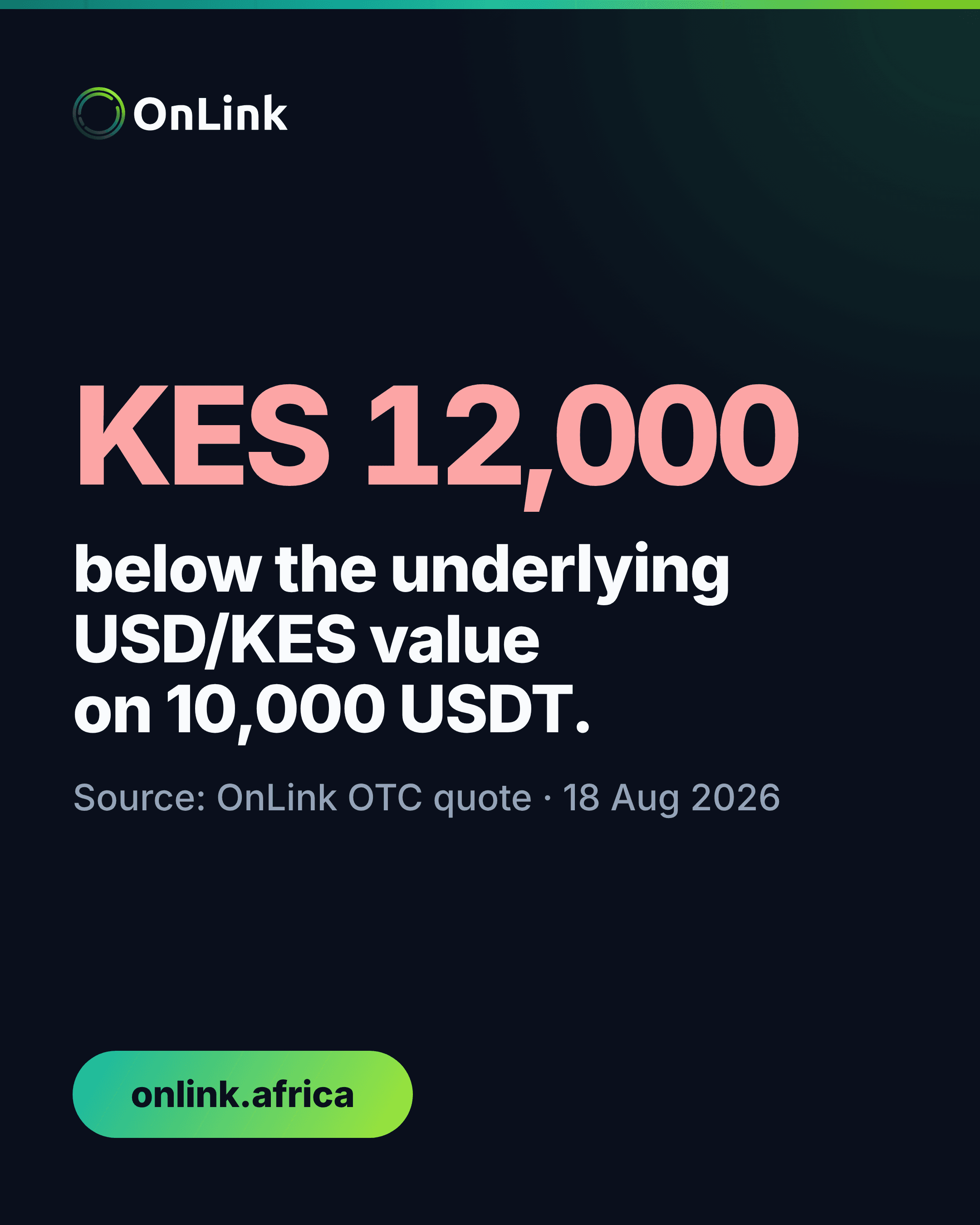
At OnLink’s 18 August quote, off-ramping 10,000 USDT returned KES 1,280,500—KES 12,000 below the underlying USD/KES buy-rate proceeds.
Learn how to compare USD to KES quotes using the exchange rate, explicit fees and final KES received—not the headline rate alone.